Thursday, February 22, 2007

Boracay

BORACAY


Famous For...


Beaches / White Beach
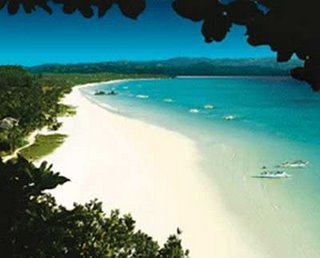
Boracay boasts of a sugary white sand beach and azure blue waters. The best part of the island is the four-kilometer White Beach known to be the "finest beach in the world." The surrounding water is shallow and the sand is finer and brighter than most beaches in the archipelago. White Beach is so, soooo fine, it feels like treading on miles of baby powder!


Aquasports


The island paradise of Boracay is a perfect place for watersports. Here, you can partake in a smorgasbord of exhilirating aqua action - from swimming and snorkeling to scuba diving, windsurfing, sailboating, kayaking, boardsailing, and boating.


Nature Tripping / Eco-Adventure


World-renowned Boracay is an adventure island ideal for island hopping, hiking, trekking, caving, mountain climbing, biking, and horseback riding. Trekking and mountain biking can bring even the intrepid to the island's quaint interior villages and to the edges' scenic rocky cliffs, discovering along the way many hidden coves with isolated beaches far from the tourist crowd.


Boardsailing at Bulabog Beach


On the eastern side of Boracay Island is Bulabog Beach. It is a boardsailor's mecca that draws enthusiasts from all over the world, especially during the peak season from November to March. In January, it is the site of an International Funboard Cup.
Paraw Regatta
Sailboating and kayaking are popular sporting activities, with Boracay playing host to the annual Paraw Regatta, an international sailboat race that makes use of the native outrigger.


Diving


Dive sites surround the island and are learning venues to both novice and professional divers, guided by competent instructors of the many dive shops that operate in the area. For trueblue scuba diving enthusiasts, Yapak in Boracay is a great deep dive.


Recreational Sports


Laid-back Boracay is the perfect venue for golf, tennis, bowling, even beach volleyball. Top-of-class amenities for these activities are available in the island. For golf bugs, Fairways and Bluewater Resort Golf and Countryclub has an 18-hole championship course.
Partyhopping
The code in Boracay is strictly informal. Walking barefoot than shod is the rule rather than the exception. Swinging discos have the beach for a floor, giving dance a new twist. From dusk to dawn, the island turns into one big party place where everyone is welcome to join in.


Mambo Number 5


For the adventure-driven, "Mambo Number 5" is a little bit of boating and wind surfing, a little bit of scuba diving, a little bit of trekking, a little bit of mountain biking, and a little bit of golf.
Shopping
Bargain shopping is a joy of a diversion while in Boracay. Souvenir pieces provide endless possibilities, from trinkets and native accessories made of shells and semi-precious stones to exotic or contemporary beach wear and fashion artworks.


Dining


The taste of the 6th Region, to which Boracay belongs, is quite simple. Charbroiled chicken is common fare. Another favorite dish is raw fish marinated in spicy vinegar. Dining is no problem in Boracay, with most resorts having their own restaurants that serve both Filipino and international cuisines. Small snack bars line the island.

Tuesday, February 20, 2007

Only in the Philippines

One of the World's Largest Eagles

Also known as the monkey-eating eagle, the endangered Philippine eagle is one of the largest in the world. With scientific name Pithecophaga jefferyi, the Philippine eagle lives in the rainforests of Isabela, Samar, Leyte and Mindanao. It has similarities with Papua New Guinea's Harpy Eagle (Harpyopsis novaeguinea). Measuring about one meter in height, the average Philippine eagle has a 76-centimeter highly arched, powerful bill. It lives on large snakes, hornbills, civet cats, flying lemurs and monkeys - the reason why it is also called monkey-eating eagle. It creates its nests in large trees some 30 meters from the ground. With an estimated population of 100 to 300 today, the Philippine eagle is in danger of extinction. It is one of the 400 exotic bird species in the Philippines, which, if not protected, would disappear from the face of the Earth. Along with the Philippine cockatoo, Palawan peacock pheasant, Mindoro imperial pigeon, Sulu hornbill and Cebu black shama, the Philippine Eagle might follow the Cebu flowerpecker which is now presumed extinct. The Philippine Eagle has come to symbolize all efforts by the Filipino people to save the remaining rainforests in the country and preserve the wealth of the nation for the future generation.


Flying Lemur
One of the most distinct creatures on Earth lives in the Philippines. It doesn't have wings but it can glide across 100 meters of space in a single leap. Like the lemurs of Asia, it moves around at night. Its head resembles that of a dog while its body has similarities with the flying squirrel of Canada. In Mindanao, people call it "kagwang". Around the world, it is known as colugo or the flying lemur. Zoologists, however, claim that it doesn't fly and it is not a lemur, a large-eyed nocturnal mammal found only in Madagascar and Comoro Islands. The truth is that kagwang or Cynocephalus volans is one of only two species belonging to the primitive order Dermoptera. The other species is the Cynocephalus variegatus or the flying lemur of Malaysia.An ordinary kagwang weighs from 1 to 1.7 kilogram and ranges in length from 14 to 17 inches. It has a wide head with small ears and big eyes. Its 12-inch tail is connected by a patagium, a membrane stretching from forelimbs to tail. This well-developed membrane enables kagwang to glide to a distance of 100 meters or more to escape from predators like the Philippine Eagle. The continuous denudation of tropical forests in the country threatens the remaining population of kagwang, which used to abound in the wilderness of Basilan, Leyte, Samar, Bohol and Mindanao. The exact number of the remaining kagwangs remains to be determined. Alarmed by the situation, the Philippine government declared kagwang as an endangered species and banned its commercial exploitation.


World's Smallest Hoofed Mammal
South of Palawan, lies the Balabac Island, home of the world's smallest hoofed mammal - the Philippine mouse deer. Locally known as Pilandok (Tragalus nigricans), this ruminant stands only about 40 centimeters at the shoulder level. In other countries, it is called chevrotain, or simply mouse deer. Contrary to its name, pilandok is not a member of the deer family. It belongs to the family Tragulidae in the mammalian order Artiodactyla. The male species has no antlers like those of a real deer. Instead, it uses its large tusk-like canine teeth on its upper jaw for self-defense; in the same way a deer uses its antlers.Aside from the Pilandok, other mouse deer species include the Malay mouse deer or napu and the African water chevrotain. They are found in Southeast Asia, Sri Lanka, and India. While the mouse deer are widely distributed across Asia, their dwindling population has alarmed the World Conservation Union, which declared them as endangered in 1996.


World's Smallest Monkey
In many respects, the Philippine tarsier (Tarsius syrichta) is different from other animals. Considered as the world's smallest primate, it measures only about twelve centimeters in length. Its two big eyes cannot move and do not have a tapetum - the upper protective tissue. Because of this, the Philippine tarsier has learned to turn its head 180 degrees. It has also two grooming claws on each foot and an almost bald tail extending about nine inches.Found in the islands of Samar, Leyte, Bohol and Mindanao, the Philippine tarsier got its name from its elongated tarsus bone. An ordinary tarsier weighs between 117 and 134 grams. It is able to move between trees by leaping as far as three meters. It also has keen senses of hearing and sight.Today, there are only about 1,000 tarsiers inhabiting the wilds of Corella town in Bohol province where the biggest concentration of these rare animals was once reported. Ensuring the continued existence of the Philippine tarsiers is the Philippine Tarsier Foundation Inc.


World's Largest Fish
Donsol, a fishing town in Sorsogon province, serves as a sanctuary to a group of 40 whale sharks (Rhincodon typus), which are considered as the largest fish in the world. Locally known as "butanding", whale sharks visit the waters of Donsol from November to May. They travel across the oceans but nowhere else have they been sighted in a larger group than in the waters of Sorsogon. They measure between 18 to 35 feet in length and weigh about 20 tons. In 1996, a marine biologist discovered that whale sharks are ovoviviparous, which means that the females produce live offspring from eggs hatched in the uterus.The Philippine government declared whale sharks as endangered species in 1998, thereby banning its plunder and exploitation. Right now, the Department of Tourism is promoting eco-tourism to protect the whale sharks in Donsol.


World's Smallest Fish
The world's smallest freshwater fish is found in the Philippines. The dwarf goby (Pandaka pygmaea) measures 1.2 centimeters or less than half of an inch, the tiniest known vertebrate. American Ichthyologist Albert Herre first discovered it in Malabon River in 1925.The Philippines is also the home of sinarapan, the world's smallest commercial fish. Sinarapan, scientifically known as Mistichthys luzonensis, is a goby found only in Lakes Bato and Buhi in Camarines Sur province. Sinarapan grows to an average length of 1.25 centimeters, only slightly longer than the dwarf goby. Today, unabated fishing in the two lakes threatens the population of sinarapan.

Source: http://www.txtmania.com/trivia/only.php

Friday, February 16, 2007

Unique wheels

When going to the Philippines, you should never miss to see and try to ride on our very own public transportation.


The Jeepney


Nothing perhaps has been associated with Filipino technology as much as the country's pride - jeepney. The word "jeep" evolved from the military designation, general-purpose or G.P., of a light vehicle first used by the Americans in World War II. Developed by the U.S. Army Quartermaster Corps, this vehicle was powered by a four-cylinder engine and was classified as a quarter-ton truck in carrying capacity. It had served as a command vehicle, reconnaissance car, and ammunition carrier.
The American soldiers brought these vehicles to the Philippines in the 1940s. After the war, these vehicles were left by the Americans and converted by the Filipinos into public utility vehicles. Employing artistic and indigenous designs, the Filipinos came up with a longer, well-decorated, techni-colored and sleeker vehicle, which they later called jeepney. From the standard military jeep, the body was extended to accommodate between 20 to 30 passengers. Modern jeepneys now sport very colorful and intricate paintings, fancy adornments, and metallic decors reflective of Filipino sentiments, values, and culture. The town of Las Pinas has been recognized as the jeepney-producing center in the country. Today, public utility jeepneys or PUJs serve as the primary means of transportation in most provinces. For this, the Philippines came to be known as the "land of the jeepneys". (source: http://www.txtmania.com)


The PEDICAB and TRICYCLE


Short distance and feeder trips could not be more exciting than via quick modest transports that ply even the toughest and roughest roads in the Philippines. The tricycle is a motorcycle with a sidecar, and the pedicab is a bicycle with a sidecar. These vehicles, familiar sights traversing residential routes and arterial roads, have offered much relief to commuters – especially in areas in the provinces where there are insufficient bus and jeepney services. Tricycles and pedicabs go where the brave yet heavy transports dare not go, getting people around despite heavy floods, road construction, and extreme traffic conditions. (source: http://www.tourism.gov.ph/)


The CALESA


The best way to go the scenic route when in the Philippines is on the calesa. A carriage being pulled by a horse, the calesa had been introduced to Filipinos during the period of Spain’s colonization of the Philippines. Looking nothing like the usual motorized vehicle, it is indeed a refreshing sight, often seen in downtown areas, especially in Manila, providing short distance passenger service. Due to its low speed, the calesa is a favored mode for sightseeing in selected tourist destinations. (source: http://www.tourism.gov.ph/)

Wednesday, February 14, 2007

Visitors Information

TIME ZONE - One time zone. 120° East Meridian Time, which is eight hours in advance of the Greenwich Mean Time (GMT).

GETTING THERE
Manila, Cebu, Davao, Clark, Subic, and Laoag are the international gateways. The Ninoy Aquino International Airport (NAIA) in Manila is the premier gateway. It is served by more than 30 airlines which fly to different cities around the world. The Mactan International Airport (MIA) in Cebu handles regular flights from Japan, Singapore and Australia as well as chartered flights from Hong Kong, the United States and other major travel capitals. Davao International Airport handles regular flights from Indonesia and Singapore. The Diosdado Macapagal International Airport and Subic airfield in Central Luzon service both chartered and cargo planes. Laoag International Airport in Ilocos Norte services regular flights from Taiwan and Macau.
Philippine Airlines, the country's flag carrier, links Manila to 14 cities in 8 countries. Major cruise liners call on the port of Manila.

ENTRY REGULATIONS
Valid passport. Except for stateless persons and those from countries with which the Philippines has no diplomatic relations, all visitors may enter the country without visas and may stay for 21 days provided they have tickets for onward journey. Holders of Hong Kong and Taiwan passports must have special permits. Visas and special permits may be obtained from Philippine embassies and consulates. More info

HEALTH REGULATIONS
A certificate of vaccination against yellow fever is required for travelers coming from infected areas.

AIRPORT INFORMATION
Airport and Facilities: Manila's Ninoy Aquino International Airport (NAIA) is 7 kms. from the city center, while the Manila Domestic Airport is one kilometer from the NAIA. The international airports have adequate traveler facilities: duty-free and souvenir shops, tourist information and assistance counters, hotel and travel agency representatives, car rental services, banks and automated teller machines, postal service, national and international direct dial telephone booths, medical clinics, and baggage deposit areas.
Facilities for the Physically-Handicapped: The airports are handicapped-friendly. Wheelchairs are available on request from the airline ground staff.
Customs: Visitors are advised to fill in the Baggage Declaration Form before disembarking to facilitate Customs examination. The following are allowed duty-free: reasonable quantity of clothes, jewelry, and toiletries; 400 sticks of cigarettes or two tins of tobacco; two bottles of wine or spirits of not more than one liter each. Porterage: Baggage carts are available for free. Porter services are also free. Tipping is traditional.Check out Airline Flight Schedules.
Airport Transfers: Visitors are advised to avail of accredited fixed rate or metered taxis at the NAIA's Arrival Area. At the Manila Domestic Airport, accredited transfer services are available on pre-paid coupon basis. Other airports are served by metered taxis. All airports have counters for hotel transport and car rental service. Airport Fees: P550 for international departure and P100 for local departure (paid in Philippine pesos only). Departing passengers for international destinations are advised to check with airport or tourist information counters (Tel. Nos 524-1703; 832-2964) The departure fees may change without further notice.
Automated Teller Machine: American Express
Duty-Free Shopping: Duty-Free Philippines near the NAIA is the country's largest duty-free outlet carrying quality imported items and selected Philippine export products.

CLIMATE
March to May is hot and dry. June to October is rainy. November to February is cool. Average temperatures: 78°F/25°C to 90°F/32°C; humidity: 77%.

WHAT TO WEAR
Light, casual clothes are recommended. Warmer garments are needed for mountain regions. When visiting churches and temples, propriety dictates that shorts and scanty clothing be avoided. Formal occasions require dinner jackets and ties (or the Philippine barong tagalog) for men and cocktail dresses or long gowns for women.

CURRENCY
Unit of currency: Peso (P) = 100 centavos. Bank notes: P10, P20, P50, P100, P200, P500 and P1,000. Coins: 5c, 10c, 25c, P1, P5, P10.

TIPPING
Tipping is expected for many services. The standard practice is 10% of the total bill. Tipping is optional on bills that already include a 10% service charge.

LOCAL TRANSPORT
By air, Philippine Airlines (Tel. No. 855-9999), Air Philippines (855-9000), Cebu Pacific (636-4938) provided daily services to major cities and towns. Asian Spirit (851-8888), Laoag International Airlines (551-9729), and Seair (891-8708) service the missionary routes. There are also scheduled chartered flights to major domestic destinations serviced by smaller commuter planes.
By sea, interisland ships connect Manila to major ports. Ferry services connect the smaller islands.
By land, Philtranco connects Manila to Bicol in Southern Luzon, to Samar and Leyte in the Visayas, and Davao in Mindanao.
Metered and fixed rate taxis are widely available in key cities nationwide. Jeepneys and buses are inexpensive ways of getting around most places. In Metro Manila, the fastest way of commuting is via the railway system. LRT connects the northern district of Monumento to the southern district of Baclaran with stations situated at major intersections. MRT traverses the length of EDSA and connects North Avenue in Quezon City to Taft Avenue in Pasay City, passing through the major arteries of Makati's financial district.

LANGUAGE
Filipino is the national language. English is the business language and spoken widely.

ACCOMMODATIONS
In Metro Manila, key cities and towns throughout the country, a wide selection of de luxe, standard, economy, and pension-type accommodations are available. In island destinations, there is a variety of resorts ranging from de luxe to special interest category.
The Department of Tourism has a Homestay Program in several destinations outside Manila. The program offers visitors the comfort of modest homes and an insight into Philippine life. For information, contact the Tourist Information Center at Room 106, Department of Tourism Building, tel. nos. 524-2384 / 524-1703.

DINING OUT
Filipino food is an exotic, tasteful blend of Oriental, European, and American culinary influences. There is a wide variety of fresh seafood and delectable fruits. First class restaurants offer gourmet specialties as well as Filipino cuisine.

ENTERTAINMENT AND CULTURE
Metro Manila is the center of entertainment and cultural activities. The premier venue for the performing arts, the Cultural Center of the Philippines, features world-class performances by local and international guest artists. Museums located in Manila and in some parts of the country offer a glimpse of Philippine history and culture. Art galleries exhibit the works of the country's leading and promising visual artists.
Manila's nightlife is one of the most vibrant in Asia, reflecting the Filipino's love for music. The hubs of nightlife activities are the Remedios Circle in Malate, Ayala Center and The Fort at Bonifacio Global City in Makati, Timog and Tomas Morato Avenues in Quezon City, and Eastwood in Libis, Quezon City. Nightclubs, music lounges, pubs, and sing-along bars feature Filipino bands and singers who are known for their great musical talent. De luxe hotels offer a variety of live musical entertainment. Concerts and stage plays form part of the country's entertainment scene.
For visitors who want to try their luck at the gaming tables there are casinos in Metro Manila and in the cities of Angeles, Olongapo, Tagaytay, Cebu, Davao, Bacolod, and Laoag.

SHOPPING
Visitors can choose from an exciting selection of great buys in a country known for export-quality items at reasonable prices: South Sea pearls, handwoven cloths, embroidered fineries, fashionable ready-to-wear and haute couture clothes, terra-cota, porcelain, and mother-of-pearl home accessories. Artifacts, pineapple fiber shirts, prehistoric jars, native handicrafts, and footwear are interesting items, too. The Philippines also produces fine basketry, furniture, fresh and processed fruits, exquisitely crafted jewelry, and gift items made of wood and stone.
Big malls are located in Manila, Makati and EDSA, while handicraft, antique and curio shops abound at the Ermita District in Manila.

BUSINESS AND BANKING HOURS
Private and government offices are open either from 8:00 a.m. to 5:00 p.m. or from 9:00 a.m. to 6:00 p.m. Some private companies hold office on Saturdays from 9:00 a.m. to 12:00 noon. Most shopping malls, department stores, and supermarkets are open from 10:00 a.m. to 8:00 p.m. daily. There are also 24-hour convenience stores and drugstores nationwide.
Banks are open from 9:00 a.m. to 3:00 p.m., Mondays to Fridays, with automated teller machines (ATM) operating 24 hours.

CREDIT CARDS
International credit cards such as Visa, Diners Club, Mastercard, and American Express Card are accepted in major establishments.

ELECTRICITY
220 volts, A.C. 60 cyles. Most hotels have 110-volt outlets.
WATERWater in Metro Manila and in key cities and towns is potable and safe for drinking. Bottled water is available in many hotels, restaurants, resorts, supermarkets, and convenience stores.

COMMUNICATIONS FACILITIES
The country has international and national direct dial phone and facsimile services, mobile phone sites, internet and e-mail facilities, and worldwide express delivery service. The postal system is efficient.
Most national dailies are in English. Foreign publications are sold at major hotels, malls, and bookstores in Metro Manila and key cities. There are 7 national television stations which broadcast mainly in Filipino. Cable TV is available in many hotels in Manila and in many parts of the country.

CONVENTION FACILITIES
Manila, the pioneer convention city in Asia, has played host to a number of prestigious international events. The Philippine International Convention Center is equipped with modern convention facilities and services. It can accommodate 4,000 delegates in its Plenary Hall and 5,700 persons in its Recepcion Hall. The World Trade Center near the PICC can hold huge exhibitions and events. Smaller meetings can be held in hotels and other establishments. Out-of-town hotels and resorts are alternative convention sites.

MEDICAL SERVICES
Hospitals in the country are equipped with modern facilities to meet any medical need. In some remote towns and cities, clinics and health centers provide emergency medical attention. Most hotels and resorts provide medical assistance. Hospitals are listed in the "Yellow Pages" of the local telephone directory.

TOURS AND SPECIAL INTEREST ACTIVITIES
Tour packages, from day trips to five-day programs, are special ways of discovering the Philippines and its wealth of culture. Special interest activities include golfing, game-fishing, diving, white-water rafting and other aquasports, trekking, spelunking, and safari trips.
Information on tour itineraries may be obtained from the Philippine Tour Operators Association (Philtoa), tel. (632) 893-0284, or from the Tourist Information Center located at the ground floor of the DOT Bldg. on T.M. Kalaw Street, Manila, tel. (632) 524-2384/524-1703.

PUBLIC HOLIDAYS
New Year's Day, January 1; Edsa Revolution Day, February 24; Araw ng Kagitingan, April 9; Maundy Thursday and Good Friday, moveable; Labor Day, May 1; Independence Day, June 12; National Heroes Day, last Sunday of August; All Saints' Day, November 1; Bonifacio Day, November 30; Christmas Day, December 25; Rizal Day, December 30.

source: http://www.gov.ph/aboutphil/vinfo.asp
Wednesday, February 07, 2007

A closer look

I would like to share this video from Youtube. This is to have a closer look on the streets of the Philippines. You will see Ayala Avenue, Greenbelt, and Market! Market! Enjoy the video!

Wednesday, January 31, 2007

Biyahe Tayo!

See some spectacular views of the Philippines and listen to our local artist singing Biyahe Tayo! (Lets Travel!). Performers includes world renown artist Lea Salonga.


Friday, November 17, 2006

Facts about Philippines


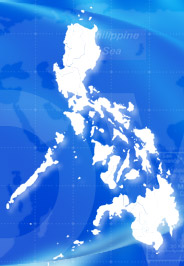
The Philippines is made up of 7,107 islands covering a land area of 115,739 sq. m. (299,764 sq. km.). Main island groups are Luzon, Visayas, and Mindanao. Capital is Manila. Time Zone is GMT + 8 hours.


CLIMATE

March to May is hot and dry. June to October is rainy, November to February is cool. Average temperatures: 78°F / 25°C to 90°F / 32°C; humidity is 77%.

POPULATION

There are a total of 76.5 million Filipinos as of the latest national census in May, 2000. Population growth is estimated at 2.36 percent annually. Luzon, the largest island group, accounts for more than half of the entire population.

LANGUAGES

Two official languages --- Filipino and English. Filipino which is based on Tagalog, is the national language. English is also widely used and is the medium of instruction in higher education. Eight (8) major dialects spoken by majority of the Filipinos: Tagalog, Cebuano, Ilocano, Hiligaynon or Ilonggo, Bicol, Waray, Pampango, and Pangasinense. Filipino is that native language which is used nationally as the language of communication among ethnic groups. Like any living language, Filipino is in a process of development through loans from Philippine languages and non-native languages for various situations, among speakers of different social backgrounds, and for topics for conversation and scholarly discourse. There are about 76 to 78 major language groups, with more than 500 dialects.

RELIGIONS

Some 83% of Filipinos are Catholic. About 5% are Moslem. The rest are made up of smaller Christian denominations and Buddhist. UNIT OF MEASUREThe Metric System is used in most trade and legal transactions.ELECTRICITY220 volts a/c is the common standard. 110 volts a/c is also used, especially in major hotels.CURRENCYThe Philippines' monetary unit is the peso, divided into 100 centavos. Foreign currency may be exchanged at any hotels, most large department stores, banks, and authorized money changing shops accredited by the Central Bank of the Philippines. International credit cards such as Visa, Diners Club, Bank Americard, Master Card, and American Express are accepted in major establishments.

Pearl Farm


Pearl Farm


Located in the southern part of the Philippines is the Samal group of Islands, an archipelago consisting of nine islands which stretch out over a land area of 28,000 hectares. Samal is a beautiful, tranquil and exotic island with a coastline adorned with white sand beaches, abundant marine life, rock formations, mangroves, and landscape elements of coconut palms, flowering plants and fruit-bearing trees. The area is blessed with various natural attractions and flourishing flora and fauna.

Nestled on the quiet side of Samal Island, The Pearl Farm Beach Resort is a mere 45-minute boat ride from the wharf. This fourteen (14) hectare spread was once a pearl farm, where thousands of white-lipped oysters transported from the Sulu Sea, were cultivated for their pink, white and gold pearls. Today, the resort beckons with the promise of a relaxing, private retreat, under the care of its friendly and charming staff.

Thursday, November 16, 2006

Bohol


Bohol

Is Famous For...

Chocolate Hills.

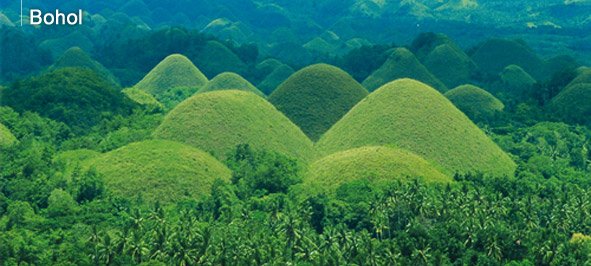
Located in the town of Carmen, 55 kilometers from Tagbilaran City, the Chocolate Hills are undoubtedly the most famous tourist attraction in Bohol. Among the 1,268 perfectly cone-shaped hills, which abound in Central Bohol, two have been developed into a resort. On top of these hills is a complex that offers accommodation, conference rooms, restaurants, and a view deck.

Dauis Church

Located in the town of Dauis, three kilometers from Tagbilaran City, Dauis Church is one of Bohol’s beautiful churches that has retained its Spanish architecture despite a semi-modern façade. The interior has life-like murals painted on the ceiling.The patron saint, the Virgin of the Assumption, is believed to possess miraculous powers. It is the object of the faithful, who attend its annual festivities. Legend has it that when the town was invaded by pirates, the townfolk locked themselves inside the church until they ran out of water and provisions. Then suddenly a well appeared at the foot of the altar where people started drawing water. It is still the main source of water for the people living in the church vicinity. Surprisingly, the water is absolutely fresh even as the well is located only a few meters from the sea.

Baclayon Church
One of the oldest stone churches in the Philippines is Baclayon Church, located in the town of Baclayon, six kilometers from Tagbilaran City. This ancient massive edifice still retains its century-old architectural design. Both in the external and internal portions of the church are various interesting relics and artifacts dating back to the early 16th century, which have now been placed at the Baclayon Museum.Baclayon is the oldest town in Bohol and the mother town of Alburquerque, Balilihan, and Sikatuna.


Blood Compact / Sandugo

Datu Sikatuna, a native Boholano chieftain, forged a Blood Compact with Don Miguel Lopez de Legazpi, representing the King of Spain, for the purpose of fostering friendly relations between the two countries. The Blood Compact that took place on March 16, 1565 is considered as the first “Treaty of Friendship” between the brown and white races. A marker of this historic event can be found in Barangay Bool at Tagbilaran City.

Dagohoy Revolt

Francisco Dagohoy led the longest revolt in the country against the Spaniards, which lasted for 84 years. There now stands a marker in Magtangtang at the town of Danao, installed by the Philippine Historical Commission to honor the heroic deeds of Dagohoy. Magtangtang was his headquarters or hideout during the revolt. Hundreds of Dagohoy’s followers preferred death inside the cave than surrender. Their skeletons still remain in the site located in Danao, 92 kilometers from Tagbilaran City.

Sandugo Festival

The festival celebrated from July 1 to 31 has been inspired by the blood compact, or Sandugo, a friendship treaty between the Philippines and Spain that took place in 1565. The annual spectacle of the province features an agro-industrial fair, cultural and historical showcase, sports events, a beauty pageant, balls and dances, entertainment shows, and streetdancing which culminates with the re-enactment of the blood compact between Datu Sikatuna and Don Miguel Lopez de Legazpi.

Bolibong Kingking Festival

Celebrated from May 23 to 24, it is a music and dance festivity depicting the history, folklore, and traditions of the Lobocanons. Bolibong Kingking is a term applied to the drums and gongs, and their rhythm, used to accompany the supplication dance ritual performed before the image of Our Lady of Guadalupe, the second patron of Loboc.

Banaue Rice Terraces

Banaue Rice Terraces


The Banaue Rice Terraces are 2000-year old
terraces that were carved into the mountains of Ifugao in the Philippines by ancestors of the Batad indigenous people. It is commonly thought that the terraces were built with minimal equipments, largely by hand. The terraces are located approximately 1500 meters (5000 feet) above sea level and cover 10,360 square kilometers (about 4000 square miles) of the mountainside. They are fed by an ancient irrigation system located from the rainforests above the mountains.
The Banaue terraces are part of the Rice Terraces of the Philippine Cordilleras, ancient sprawling man-made structures dating from 2,000 to 6,000 years old. They are found in the provinces of
Mountain Province and Ifugao, and are a UNESCO World Heritage Site.
Locals to this day still tend to the rice and vegetables on the terraces, although more and more younger Ifugaos do not find farming appealing, often opting for the more lucrative hospitality industry generated by the Rice Terraces. The result is the gradual erosion of the characteristic "steps", which need constant reconstruction and care.


Dubbed as the "Eight Wonder of the World," the Banaue Rice Terraces start from the base of the mountain range and reach up to several thousand feet high. It is said that their length, put end to end, would encircle half of the globe. Made 2,000 years ago, these rice terraces manifest the engineering skill and ingenuity of the sturdy Ifugaos. Streams and springs found in the mountains were tapped and channeled into irrigation canals that run downhill through the rice terraces.